How a software engineer with a W-2 job and 4 kids bought an IT business he'd never heard of. Here's what 6 LOIs, 1 partner, and a 52-day close taught him.

Learn why consuming endless business content can feel productive without creating real progress, and how turning knowledge into action can actually grow your business. It's 6:40 a.m. You're 2 episodes deep on a podcast about hiring A-players, 1.5x speed, coffee in the cupholder. And you're driving to a business where you still make all the sales calls. Somewhere in your notes app sits a list of 40 ideas from shows like mine, but you've only tried executing 1 and a half... Look, no judgment. You've got plenty of company. 58% of Americans now listen to podcasts monthly and 45% listen weekly, both record highs according to Edison Research's Infinite Dial 2026. That weekly number works out to 130 million people. When you tack on the YouTube breakdowns, the audiobooks at 2x, the threads you saved "for later," and yes, this newsletter: you've never had more access to information. And yet most businesses look exactly the same as they did last year, yours (probably) included. Quick warning before we go further. If you're here for a pep talk, you're reading the wrong newsletter. There's a mirror waiting at the end of this email, and it doesn't do flattering angles. The Age of Mental Masturbation Here's the uncomfortable truth. Consuming business content feels like working on your business. Your brain gets the hit, and you screenshot another inspirational quote for later. Then Monday shows up and you run the same plays you ran last Monday. So let's call it what it is (sorry, Mom): mental masturbation. The feeling of progress, without the actual progress. Feels great. Does nothing. In fact, Stanford professors Jeffrey Pfeffer and Robert Sutton wrote a whole book on this in 2000 called The Knowing-Doing Gap. Their finding: companies rarely stall because they don't know what to do. They stall because they never turn what they know into action. 26 years later, most of the knowledge is free. You can have the best operators on earth in your ears on
Learn why consuming endless business content can feel productive without creating real progress, and how turning knowledge into action can actually grow your business.

Laid off from tech, Krista bought a flower shop inside an old airplane factory. Here are 5 lessons from her search you can use to find your own business. “Wait for the glass slipper. It will come.” Meet Krista. Krista Sohmer owns Poppy and Pine, a flower and retail shop outside Denver. The shop sits inside a marketplace built in an old airplane manufacturing warehouse. Big space, lots of foot traffic, and flowers where the fuselages used to be. Krista has spent over 12 years in tech marketing, and for most of that time, it felt stable. Then she watched friends get laid off one after the other over the last 5 years. It eventually hit her too. “And I went through a layoff at my last company and that really shook me. And so being an owner, it feels like I am more stable in a sense of like, well, it's not replacing my salary. It's at least a little bit of something that I can control more I can fall back on.” A few friends started talking about buying businesses, and she got curious. So on her birthday weekend, she gave herself a gift: a ticket to one of Codie's virtual events. Something clicked. She joined the community, took the group calls, built a deal box, and started showing up to meetings. Then she gave herself a year to find the right business. Some months, she made peace with missing that deadline. She evaluated “everything under the sun,” and sent 4 or 5 LOIs. She went down the franchise rabbit hole and climbed back out, finally closing on Poppy and Pine, her flower shop, on July 1st of this year. Here's what she learned along the way. FREE EVENT Krista built her deal box, wrote her LOIs, and worked through diligence with the Contrarian Academy community in her corner. And it all started with a free event... Here's what you'll walk away with when you join in: How to buy the right business for you. Your 1st deal or your 10th, the right business fits your schedule and your goals. We'll show you how to spot the fit Poppy and Pine Retail Floristry Bought an absentee-run flower shop after a corporate layoff, then rebuilt its marketing from scratch
Laid off from tech, Krista bought a flower shop inside an old airplane factory. Here are 5 lessons from her search you can use to find your own business.

Most of the top 1%'s income gains since 1985 came from Main Street businesses, not tech. Take the 5-question test to see if you're your own bottleneck. The Millionaire Next Door You’ve probably shaken hands with a multimillionaire without knowing it. America mints about 1,200 new millionaires every day, and some wild new statistics in Owen Zidar and Eric Zwick’s new book, The Everywhere Millionaire, show they aren’t tech moguls or private equity suits. Far from it. There are about 3 million “stealthy wealthy” whose average net worth lands around $25 million. Meaning, for every 1 name on the Forbes list, there are 4,000+ private owners worth $10 million or more. And they don’t own fancy AI apps. They own law firms, car dealerships, medical practices, commercial contracting companies, and regional restaurant chains. All that ownership adds up to 13X more wealth than the Forbes 400 combined. After spending more than a decade inside anonymized Treasury and IRS records, Zidar and Zwick found that more than half the rise in the top 1% income share since 1985 ran through pass-through businesses. 5.8 of 10.5 percentage points. Zidar says economists spent 40 years studying "a few redwoods in Silicon Valley" and never saw "the vast forest of American entrepreneurs." These aren't giant empires either. Owners in the top 1% run businesses averaging $3.7 million in sales with 28 employees. That’s a 12-truck HVAC company or 3 dental offices and a good office manager. The exact kind of businesses that show up on a site like BizScout every week. You’re standing in the forest right now, and you don’t even see it! If you’re reading this, you know I talk about this all the time. You don’t have to be the next big startup founder to build real wealth, because there’s plenty of money on Main Street. And Zidar and Zwick’s findings prove it. They also found something else I think you should know. But I’ll get to that in a sec. Hot Dog
Most of the top 1%'s income gains since 1985 came from Main Street businesses, not tech. Take the 5-question test to see if you're your own bottleneck.

A former Cirque du Soleil coach spent 2 years fighting zoning to build a micro resort. Then he bought one instead. 5 lessons from his glamping deal. "It wasn't my intention to buy a micro resort. But it just sort of happened." Meet Beau. Beau spent 10 years coaching for Cirque du Soleil. Quidam. Totem. He even helped build Drawn to Life, the Disney collaboration down in Orlando. Then in December 2023 he moved to Austin and did something completely different. He opened a school. NextGen Academy is an Alpha sister school built from the ground up by a guy with zero background in children’s education. "I come from a coaching background," he told us. "(So I...) built the plane as I flew it." He still runs that school full time, so everything you're about to read happens after he clocks out. For his 5-9, Beau and his partners own and manage short term rentals across 3 markets. They started during the pandemic and self-funded every single deal. 10 acres in Tennessee, 22 in New York. The plan was always to build micro resorts on it, but the permitting and zoning process had other ideas. So in June 2025 he joined the Contrarian Academy, looking for a business to support the rental operation. On July 31, he closed on something else entirely. 5 tiny cabins in a national forest in Texas, about 90 minutes from a major city, purchased for just shy of $2M. Here's how he got there. TOGETHER WITH ASK DOLLY You do everything right. You take the raise, you max the 401k, and you skip upgrading your SUV. But you don’t feel like you’re making any real progress... Part of the reason is that no one ever taught you how to pay attention to your money. That’s what Ask Dolly is for. Ask Dolly is the difference between staring at your accounts and actually knowing what to do next. It's not just showing you numbers, it's helping you decide. Our friend Vivian Tu built Your Rich BFF into a 10-million-follower operation by making money make sense Stay in Babia Glamping Bought a $2M glamping resort in 8 months after joining the Contrarian Academy
A former Cirque du Soleil coach spent 2 years fighting zoning to build a micro resort. Then he bought one instead. 5 lessons from his glamping deal.

Michael Jordan won 6 titles by giving up the ball, then ran his team into the ground. Take the free Owner Score and find out what's capping your business. For years I flew to Santiago, Chile, every single week. 11 hours in an aluminum tube, rocking through night and cloud. I made that trip more than 100 times. I liked Chile fine. What kept me going back was a belief that I had to be there, that deals would die without the magic trick of me shaking hands in the room. One of those flights landed on my birthday. Delayed 4 hours. The terminal hummed with that fluorescent fatigue, everyone around me scrolling and sleeping and living, and I drank too much cheap airport wine and started crying. Not the big kind. The quiet kind, where your face is already wet before you notice it's happening. A stewardess asked if I was okay. She was kind about it, which somehow made it worse. How do you explain to a stranger that you're weeping because of the life you built with your own hands? Somewhere over the Andes, between night and landing, it finally hit me. I hadn't built a business. I'd built a pedestal I couldn't jump off of. Here's the part that still stings. That company has run for the last 8 years without me, and my #2 handles it. Every flight I took, every birthday I missed, every time I told myself they need me there, the business was proving me wrong. I just refused to listen. Why I wrote a second book Main Street Millionaire was about getting into the game. Own or Be Owned is about winning it. And I didn't write it from a mountaintop with a cigar, slowly plugging away at a typewriter. No. I wrote this because I needed it. I was running 3 jobs inside a company I'd built to set me free, and it was destroying me. If that sounds uncomfortably familiar, good, because the book is intended to fix exactly that. This particular trap has nothing to do with laziness. Unfortunately though, everything that got you where you are stops
Michael Jordan won 6 titles by giving up the ball, then ran his team into the ground. Take the free Owner Score and find out what's capping your business.

Why your ROAS is lying to you, how the Ad Trap starts by rewarding you, and the 3 numbers that tell you whether you own your demand or only rent it. So I posted this about a week ago: And the internet exploded. (God forbid a woman have a hot take. 🤣) Look, sometimes I like to be a little hyperbolic to get a conversation started. Fair point by the trolls. And sometimes that conversation turns into a shouting match in the comments. Marketing agencies came after me like I'd kidnapped their families. Ad buyers called it naive, along with some other choice words. Someone informed me I'd clearly never scaled anything real. LOL. Here's what's funny about that: marketers make money when you run paid ads. Their business model relies on you spending as much as possible, because most agencies get paid a cut. Most marketers obsess over ROAS instead of profit. Most salespeople care about top line, not profit. I've even heard media buyers brag about budgets the same way other people brag about horsepower. Pretty much everyone arguing with me had a financial reason to. And I get it. Advertising is their job. From their perspective, as long as the ROAS works, everybody's happy. Which is why I devoted a whole chapter to advertising in my new book. In Own or Be Owned, this idea has a name: Promote. It's 1 of the 12 Profit Levers, and done right it builds an asset that accelerates your growth. Get it wrong and you'll be paying Meta more rent every year for less return. Which brings me to the $10 million business we told to turn off every ad. A Method to the Madness Imagine throwing $200,000 a month into Facebook and Google. That's more than most people make in a year. For the company we were looking at, that was just the cost of doing business. Their ads drove phone calls. Calls turned into appointments. Appointments turned into revenue. Nothing wrong with that. At $10 million a year in revenue and 70% margins, there were no red
Why your ROAS is lying to you, how the Ad Trap starts by rewarding you, and the 3 numbers that tell you whether you own your demand or only rent it.
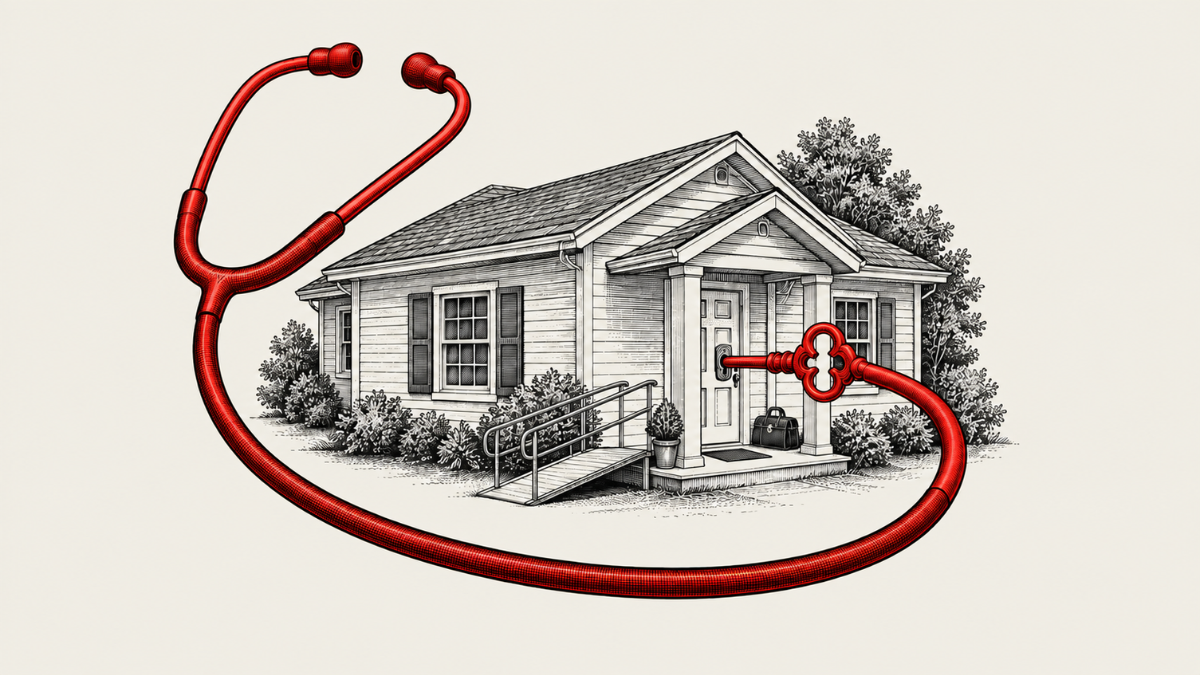
Brian Barnett was a hospital PA with zero business experience. Here's how he found a senior home care company, won over the broker, and closed the deal. Meet Brian Brian Barnett is a physician assistant, who just acquired a senior care business in Florida. His story is one of following the process, being flexible, and working his butt off. Exactly the kind of person we love working with at Contrarian Thinking. And based on our interview, we’ve got no doubt he’s going to scale his business and keep growing. The only question is how big does he want to go? While he recently moved down to sunny Stuart, Florida to keep an eye on his new business, he doesn’t plan on living there forever. His family is up in New York, and he wants to return to his day job there once everything is running smoothly. And that’s something people miss: you don’t have to hate your job to want to become an owner and scale a business. You also don’t have to sacrifice your life to run and scale a business. (In fact, building a business so good it runs without you is kinda our thing...) What pulled him toward business buying was a question about his savings, not his career. “Initially it was really more of a financial goal,” he told us. “What do I do with my other money? How do I invest this? The stock market?” Then he started getting our newsletter. Other people’s stories kept landing in his inbox, and one day he decided this whole “buying a business thing” was 100% possible for him too. Ownership started looking less like a pipe dream, and more like an asset class he could control. So he joined the Academy with no idea what he wanted to buy and no business background at all. Then, on August 10, he closed on a senior home care company in Stuart, Florida. Here’s how he got there. 1. The first 8 months didn’t count Brian finished the course and then did what almost everybody does. Not much. “I realistically didn’t spend enough time searching as I Acorn Elder Care Senior Home Care Closed his first acquisition with zero business experience after joining the Contrarian Academy.
Brian Barnett was a hospital PA with zero business experience. Here's how he found a senior home care company, won over the broker, and closed the deal.
The 5-category Hiring Matrix Contrarian Thinking runs on every candidate, and the scorecard behind our scariest hire. I pulled her into a room because I'd run out of other options. For weeks she'd been touring the company like a lounge act. Different audience, same whiny set. We work too hard, this place is crazy, everyone else is the problem. "You've told me you have a problem with your manager, with ops, with the content team," I said. "Have you actually talked to any of them about it?" She looked at me. "Well, no. They wouldn't listen anyway." There it was. All she'd ever wanted was an audience. So I decided to give her a new one. Firing her took 20 minutes. Undoing what she'd already done to the team took months. Here's what you might not know about a bad hire: underperforming is the least of it. The real damage is how they poison everyone around them. Every person you bring in either compounds your standard or corrodes it. Most owners run the wrong version by accident. They talk to 3 or 4 people, pick the least terrible one, and act shocked 5 months later. Turns out, hiring is hard. It's why we built a process the whole company follows for every single hire. We’ve had to. Contrarian Thinking has outgrown 3 offices since we started in 2019, and over the last 9 months we've added about 50 people to the payroll. We've gotten it down to a science, so go ahead and steal it for your next search. The Hard Part You want better hires? Fix the core problem: too few candidates, and a standard so flexible it could be an Olympic gymnast. Here's the math. For every 50 profiles you scroll, 10 to 20 turn into real conversations, and 1 turns into an offer. Top performers are already winning somewhere else, which means you have to go get them. Block an hour a day for hunting. Open LinkedIn, type "Austin, Texas, Chief Marketing Officer," and start DMing strangers. One of our best content hires came
The 5-category Hiring Matrix Contrarian Thinking runs on every candidate, and the scorecard behind our scariest hire.

Ian, Randol and Karen run wildly different businesses. All 3 hit a wall, and all 3 got moving again by fixing 1 thing. Here's how to find yours. “I always thought luxury was the icing. But it was actually the cake all along.” In our community, we see all sorts of businesses with a million different problems. Take these three: Ian inspects houses, Randol runs a plastic surgery practice with his wife, and Karen rents space to hairstylists. And while their businesses are wildly different, each owner shared a similar problem. All 3 hit a wall they couldn’t seem to climb, and all 3 got moving again by addressing a few simple things. And in case you’ve been living under a rock, Codie's new book, Own or Be Owned , takes everything she’s learned over the last two decades building a portfolio of successful businesses worth over 9 figures, and distills it into 12 Profit Levers owners can pull to create a company that runs without them. Most owners are really good at pulling one, but completely ignore the others. Own or Be Owned helps point you to the biggest 2 problems stopping your growth, and gives you the tools to fix them. Here's what it looks like when a stuck owner finds their bottleneck and pulls the right lever. 1. Ian sold to everyone → Persona Ian Mayer started a home inspection company so nobody could lay him off again, and it worked... right up until it didn’t. He hit the same revenue ceiling 4 years running, but by the only scoreboard he had, he was doing everything right. More inspections, more agents, more work. Then he sorted his customer list by revenue instead of job count. “And I went, oh.” A small group jumped to the top. Luxury agents with bigger homes, where pools, guest houses, and sewer scopes stack on top of an already higher base price. “They may not give us as many inspections, but they give us way more average revenue per customer.” Ian didn't change how he worked. He changed who he worked
Ian, Randol and Karen run wildly different businesses. All 3 hit a wall, and all 3 got moving again by fixing 1 thing. Here's how to find yours.

Time is the only asset you can't make more of. Here's how Codie protects hers, and the meetings she flat-out refuses to take. Don’t waste my time My phone buzzes and it’s my podcast producer: "Hey, when you get a minute, give me a call." So then I get on the call and they just want to move a meeting... While I'm glad no one’s in the hospital, now I’m picking out a headstone . Typing out, "Can we talk about the Henderson invoice today?" costs you negative seconds, and by making me take a call that definitely could’ve been a text, you’ve done something egregious. You’ve wasted my time. Time is, by far, the most valuable asset we have. And all this made me think about a few of my billionaire friends and how one of the biggest levers they all pull is related to their time. Getting the most out of theirs, not wasting anyone else’s, and focusing it where it matters. Here’s a few ways to maximize the time you have. 1. Never uni-task As an owner, you won’t have a ton of free time anyway. So anything you can do to double-dip will pay dividends on your calendar’s whitespace. A few ideas: Get a portable red-light to use while you answer emails. There’s plenty out there, but make sure you’re getting one with the right light spectrum or your mitochondria won’t feel it. It’s got tons of benefits, and it’s an easy add-on for deep-work blocks. Use a standing desk and walking pad during meetings. I know it’s not always possible to take meetings walking outside (this Texas heat is no joke), but this is the next best thing. This helps you get your steps in during long days, and keeps you sane. Outsource your low-level tasks . I’m talking anything under a certain dollar amount/ hour. If it’s not worth your time, it gets pawned off. One of my biggest unlocks was just getting a cleaner a few times a week. That one change will win back hours of time spent tidying up and allows you to actually relax at home. The
Time is the only asset you can't make more of. Here's how Codie protects hers, and the meetings she flat-out refuses to take.
.png)
How one buyer built his buy box around his life, sent LOIs before he felt ready, and hired past his own skill level. 6 lessons from an acquisition story. "I would rather learn from my own mistakes fast than wait for the perfect moment." Meet Shaker. Shaker Albrahim started his entrepreneurial journey in a school hallway. Candy, bought cheap, resold at a premium to his classmates. The margins covered pocket change, and the game hooked him for life. But instead of going for an MBA, he studied physics at the University of Arizona. Always an A-student, his goal was to provide for his family. While he could’ve pursued academia, Shaker knew there was a bigger opportunity elsewhere. In his last year of college he found e-commerce, built an Amazon store from zero, and sold it. Rather than take his pocket change and try something else, he doubled down and kept building. Over the next several years he would run 15 different e-commerce businesses. Then he walked away from all of it. "I just told them, hey, I don't want anything from that. I'm done from this path." Back to zero. He'd built enough from scratch, and found the ceiling. This time he wanted to buy. "I had the cash. I wanted a fast track." He'd followed Codie for years, and ultimately joined the Contrarian Academy so he wouldn't get his first acquisition wrong. Just 2 months of searching later, he had a business under LOI. 4 more followed over the next year, and he's grown every one of them since. Here's how he did it. 1. His deal box started with what he knew Shaker knew going in that Codie isn't an e-commerce evangelist. So he spent a while looking at other sectors. Then he saw something familiar listed at a favorable multiple, and stuck with what he knew. E-commerce. And while we specialize in helping people acquire service-based businesses, Shaker had 2 (good) reasons to stick with selling products online. First, he was moving back to Saudi Arabia. His product sells
How one buyer built his buy box around his life, sent LOIs before he felt ready, and hired past his own skill level. 6 lessons from an acquisition story.
Growth costs cash before it pays you back. Here are 5 ways to fund your next move without draining your own accounts. Growth Can Kill David Packard (the Packard in Hewlett-Packard) liked to say more companies die of indigestion than starvation. Robert Herjavec, a recent Big Deal guest, said, "...urgency creates opportunity, but patience builds wealth." Translation: growth without strategy kills more businesses than slow months do. Growth is necessary, but every new hire and every new location costs you cash before it pays you back. We call it the Growth Tax, and it's why owners doing everything right can still feel broke. So here's 5 ways to pay it without emptying your accounts. TOGETHER WITH SOFI Contrarian Thinking is a compensated partner of SoFi. 1. Capital That Moves as Fast as You Do Growth opportunities come with expiration dates. The equipment auction ended Friday, before you heard back from your bank. And somebody signed the lease next door because your loan didn't get funded in time. SoFi's Small Business Loans can help business owners move when the moment is right, with access to up to $250K* and funding as soon as 24 hours after approval^. The application is simple, and SoFi's loan has clear, upfront pricing and terms of 6, 12, 18, or 24 months. Weekly and monthly repayment options are available, and if your investment pays off sooner than expected, no problem. You can repay the loan early with no prepayment penalty. Whether you're a solopreneur, leading a small team, or growing an established business, a SoFi Small Business Loan could help fund your next move. In other words: built for Main Street. Click HERE to see what options could help you make your next move. Terms apply. See the bottom of this newsletter for more information and disclosures about
Growth costs cash before it pays you back. Here are 5 ways to fund your next move without draining your own accounts.

Peter bought his first business after a layoff. Inside the due diligence, the seller renegotiations, and the 6 lessons from closing an SBA deal. From BiggerPockets rabbit hole to business owner Peter Skrzypinski spent over a decade as a real estate investor while holding down a W2. A couple of rental properties, the BiggerPockets forums, the whole deal... Then the pandemic gave him some extra time, so he surfed his way to the end of the real estate internet. It seemed like every podcast was just a Russian doll situation of podcast hosts interviewing each other ad infinitum, ’til there was nothing new left to learn. That is, until he discovered Codie and picked up Main Street Millionaire. He loved the content and got really curious about buying a business. But his honest feeling at the time? “I’m [probably] never going to do that.” Then he got laid off. About a year into unemployment, he found a flooring company on the internet one town over. That deal died fast (more on that below), but Peter got bit by the business bug. Hard. So when he got his next deal under LOI, he joined the Contrarian community to pressure-test his due diligence. Not long after, he closed on a 27-year-old exterior property maintenance business in New Jersey. Deck restoration, house washing, asphalt maintenance... and Christmas lights. Here’s what he learned on the way. 1. The listing is the dating profile. The tax return is the background check. Peter’s first foray into biz buying was a... learning experience. He randomly found a flooring company on the internet with a deal that looked incredible, which is probably when the alarm bells should’ve started. The ad claimed $500,000 in seller’s discretionary earnings on a $950,000 asking price. Then Peter pulled the tax returns. Turns out, the
Peter bought his first business after a layoff. Inside the due diligence, the seller renegotiations, and the 6 lessons from closing an SBA deal.
.png)
Chick-fil-A does more than double McDonald's per store, and the greeting isn't why. Here are the 3 decisions behind it, and how to run the same play. Everybody credits the greeting. You pull up to the window, the brace-faced teenager hands you a bag, you say thanks, and hear "my pleasure," as you roll up your window. It's warm. It's memorable. It's almost always cited as one of the reasons Chick-fil-A stands out. And it helps... But it's really just part of the packaging. What would happen if you handed every McDonald's crew member in America a script Monday morning and made them say "my pleasure" for a year? My guess is McDonald's would still be doing well under half the sales per store that a standalone Chick-fil-A does. Those stores averaged roughly $9.2M in 2025 per the company's own FDD, while McDonald's runs near $4M. The greeting is a differentiator, sure. But there's 3 decisions underneath the shiny exterior about what to sell, what to charge, and when to be open that makes Chick-fil-A one of the nation's biggest chicken shacks. Decision 1: Sell fewer things Chick-fil-A sells chicken. Period. No pivoting to fish sandwiches if the quarter looks soft. Poultry or death. Now look at Raising Cane's, which took the same logic and went one step further. Cane's sells chicken fingers, fries, toast, slaw, 1 sauce, and done. No chicken burgers, no wraps, no breakfast, and no seasonal pumpkin anything. They’re not worried about pleasing everybody all the time, because that’s a recipe for pleasing nobody. Cane’s only does a few, simple things, and they do them well. After 29 years of simplicity, Cane's runs about $6.6 million per store, more than double competitors like Zaxby's and Bojangles, and second in per-unit sales only to Chick-fil-A. Here's a little detail I love.
Chick-fil-A does more than double McDonald's per store, and the greeting isn't why. Here are the 3 decisions behind it, and how to run the same play.

Learn how to survive your business’s slow season with smarter cash flow planning, off-season offers, and strategies to keep revenue coming in. How This Tree Company Stopped Dreading Winter We highlighted some wins inside the community at our morning meeting today, and one of them was just too good not to share. The main lesson applies to almost every Main Street business we see: what do you do when the phones stop ringing during slow season? Here’s the story. The Turnaround We aren’t naming any names (we’ll save that for the full feature) but one of our members has a tree company. Their fiscal year runs October through September, and when they joined Boardroom back in March of this year, it looked like they’d only make about half of what they did in 2025. Fast forward 4 months and they’re reporting big enough numbers they’re tracking to beat last year’s revenue by nearly 20%. Here’s what we helped them turn that around: Promote. They started sending a newsletter to their customer database, and told us about 60% of their new customers come from their sends. People. They hired more crews and more sales staff. Profit. They brought labor down as a percentage of revenue, which freed up cash to reinvest. Great story. But here’s why we really wanted to share it with you TODAY. It’s the end of summer and some of your businesses are about to slow down... Tree work in New Hampshire is seasonal. When the ground freezes, the phones cool off and the crews hired in July still want paychecks in January. And like a squirrel who sees the first leaf turning brown, seasonal businesses have to survive the winter by stuffing cash in their fuzzy cheeks and getting creative. So let’s gather up some nuts and get ready for slow season. Lesson 1: Your January problem gets built in August Cash
Learn how to survive your business’s slow season with smarter cash flow planning, off-season offers, and strategies to keep revenue coming in.



.png)
.png)
%20(6).png)





.svg)


